
I Built a System to Spy on Myself
 Wes Pomeroy · · 3 min read
My home finance system pulls in every transaction I've made going back years, and I've been cleaning up how each one is categorized. A handful I couldn't place: ATM withdrawals, checks, merchant names that meant nothing to me. Checking them against my email and texts from the same days solved most of them. For the rest, I needed to know where I was when the money went out.
So I started spying on myself.
A Location Service on My Own Web Hosting
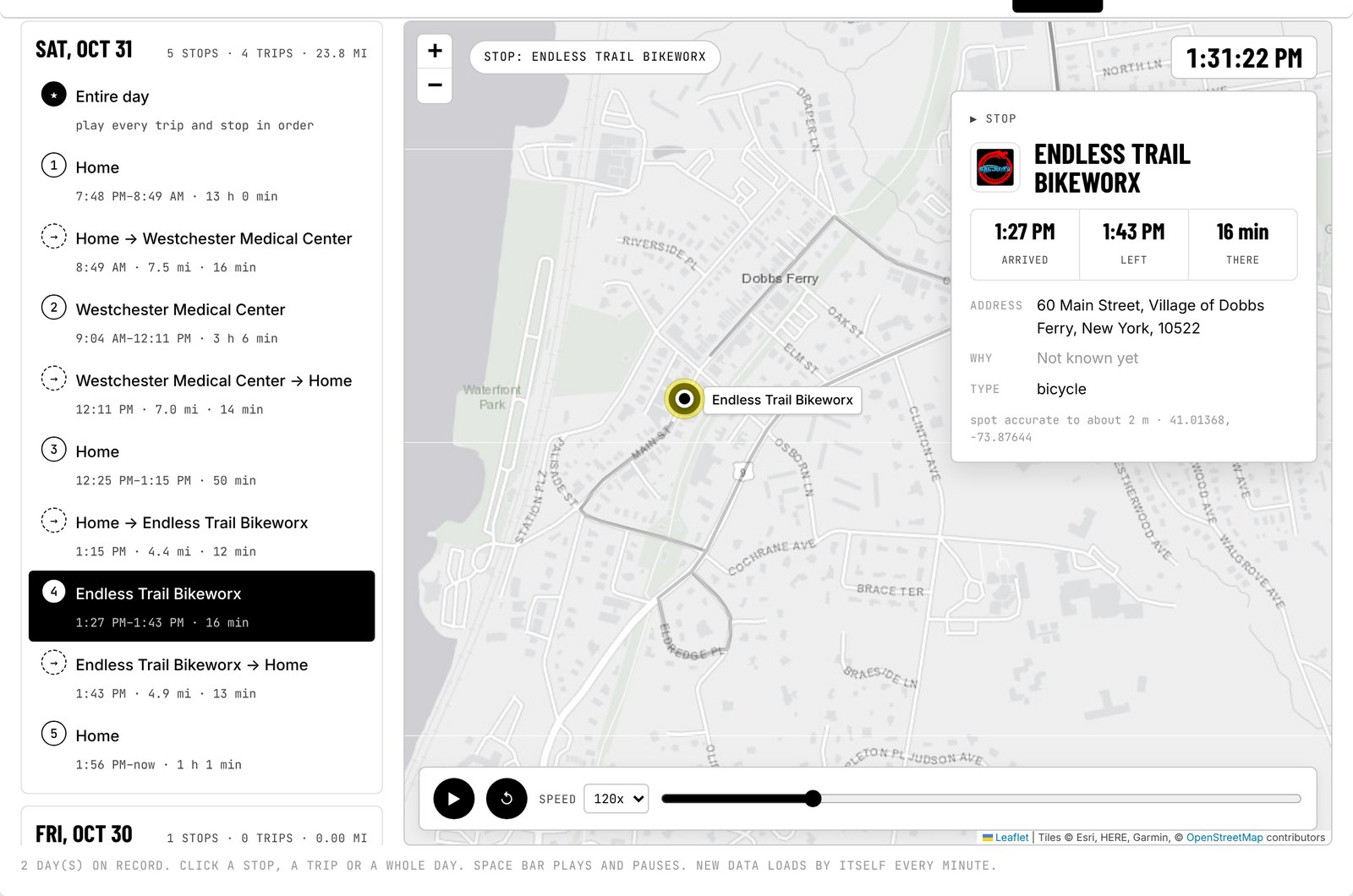
A free, open-source app on my iPhone sends my location to a small service on web hosting I already pay for. The service turns a day of jittery GPS readings into a clean record of where I stopped, how long I stayed and which roads I drove, with each stop usually accurate to within a couple of meters. Every night those stops get filed next to my email and texts, so I can look up where I was when I sent a message or when a charge went through. A page on my personal dashboard replays any day on a map.
Uses for a Location Memory
Once I had it, the uses went well past my financial forensics:
- Finding where you parked.
- Retracing your steps when you lose something.
- Explaining a charge you don't recognize.
- Keeping a mileage log for taxes and expenses.
- Getting the car serviced when it's actually due, based on the miles you really drove.
- Checking what time you left somewhere or got there.
- Lining up sleep, mood or a health symptom with where you were, to see what's helping.
- Seeing how many hours a month go to errands and driving.
- Keeping an eye on a parent or a kid, the way Find My and Life360 already do.
Software Built for One Person
None of this was impossible before. It just cost too much to build for one person. Software usually pays off only at scale, so a company builds it for millions of people, with the accounts, support staff and uptime promises that come with that. With one user, most of that work goes away. AI made it practical for me to build this myself, and it costs next to nothing to run.
No Middleman Selling My Data
A feature like this normally means relying on another company's app. Free location apps aren't really free, because they pay for themselves with what they learn about you. Mine runs on my own hosting, and no company profits from the data, not even in anonymous form. My web host stores it but has no right to use it.
Connecting My Location to Everything Else
Location on its own is handy. Next to my bank transactions, email and texts, it answers questions none of them could answer alone. That's a mix of data I'd never hand to one company. Because I own all of it, I can connect it without trusting anyone else to keep it safe, and that's where many of the uses above come from.
I'm Also the Security Team Now
A company running this for me would also handle the security. Running it myself means building it securely from the start, locking down my own computer, testing how the service could be abused and keeping all of that up over time. Some risk always remains, so you build to the level of risk you can live with. I live a basic suburban life, so that was an easy call. If your life is more exciting than mine, think harder before you build one.
P.S. The Sales Pitch
Your company probably already owns the data that would answer the questions you care about. It just sits in systems that don't talk to each other. Helping businesses work out what to connect and what to build is my job now at wespomeroy.com, and I build personal tools like this one too. If this was useful, please like it and pass it along.