Getting good output, reliably
Most of the gap between a useless answer and a good one is what the model was given to work with. These pieces cover how to give it the right material, from working around its lack of memory, to writing your standards down so it doesn't invent new ones, to keeping your work with you when you switch tools.
They also cover sharing AI projects with a team, turning a department's know-how into a reusable skill, and stopping the low-effort AI writing that wastes everyone's time.
-
AI Slop Is Wasting Your Team's Time. Here's How to Stop It.
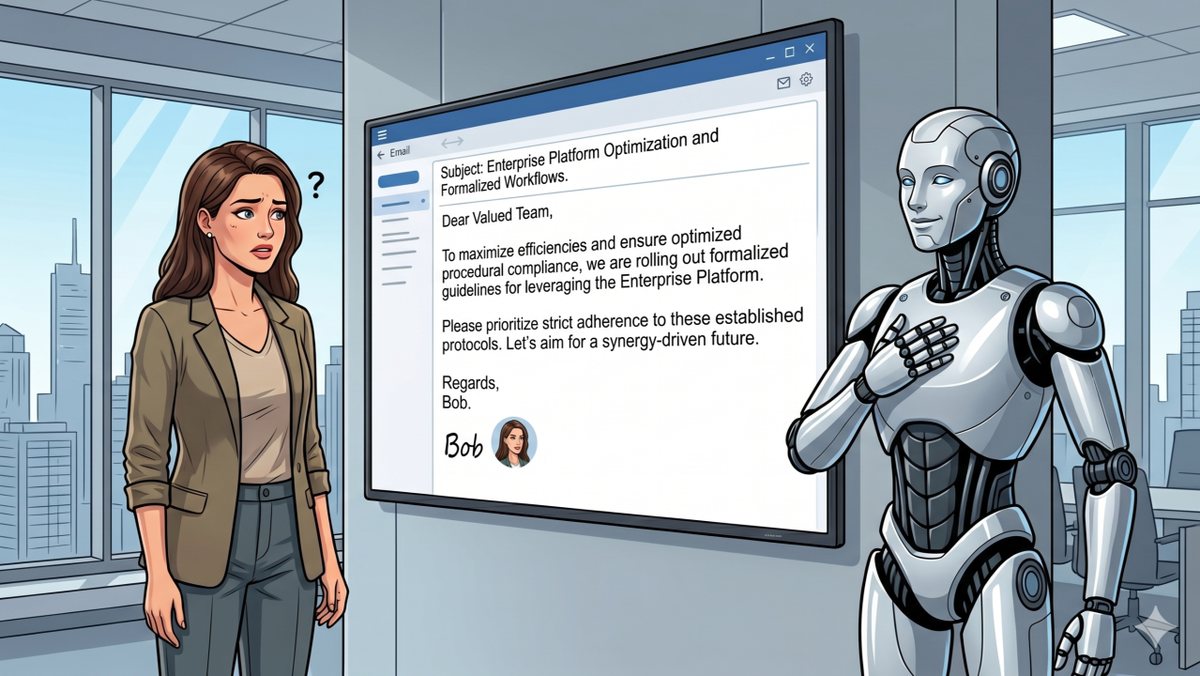
· 5 min readA friend's team started rationing AI because the work looked like slop, and I think that gets it backwards. Using my wife's fight with Yahoo's Comic Sans default as the model, I lay out what slop costs readers and six ways to stop sending it.
-
I Turned a Legal Department Framework Into an AI Skill. It Still Needs a Lawyer.
· 5 min readI built one part of the Thomson Reuters Institute's toolkit for showing a legal department's value as an AI skill. It did much of the manual work, but a rule I wrongly credited to TRI showed why it needs someone who knows the field.
-
Okay, This Is Getting Weird
· 6 min readI had ChatGPT and Claude each build a launcher bar on my computer, then had Claude interview ChatGPT about the work while I ran an errand. Both admitted their weak spots, and both said to keep Claude's sturdier bar over ChatGPT's prettier one.
-
I Changed Tools in a Day. My Work Came With Me.
· 3 min readWithin a day of trying Google Antigravity, I was doing my work in it at close to my usual Claude quality. My team's setup moved over too, and my advice is to get attached to what your work needs, not to any one tool.
-
AI Was Solo. Now It's a Team Sport.
· 3 min readIn a team huddle, a colleague pulled down a project I had worked on for weeks, and her AI already knew everything in it. I describe how we built shared project memory so a team can work the same AI project at once.
-
You Valued Sending More Than Writing
· 6 min readI sent a colleague a message Claude drafted that I never read closely, and an AI-made podcast showed me how that kind of writing comes across. My fix is a voice file the AI reads every time, plus reading every line before I send.
-
Your AI Has a Bias to Build - And That's a Problem
· 3 min readWhen my AI got someone's title wrong, it offered to fix the title instead of asking why the mistake happened. Claude tends to patch the output and move on, so I push it to find the root cause and regenerate clean.
-
How to Work Around AI Amnesia
· 3 min readEvery AI chat starts with no memory of you or your work, which I call AI amnesia. Brief it like a smart new hire with a short context file, and keep that file lean, because too much context makes results worse.