Judging AI vendors and what you're spending
Most of what I look at here comes down to one question: will this work inside an actual organization? These pieces cover how to read a vendor's pitch, how to tell whether the expertise behind a product came before the AI, and where a wrong answer gets caught before it costs you.
They also cover the money side. That means why runaway AI spending is a governance problem, how to keep the budget owner informed, what to check before you renew, and how to stop paying top prices for easy questions.
-
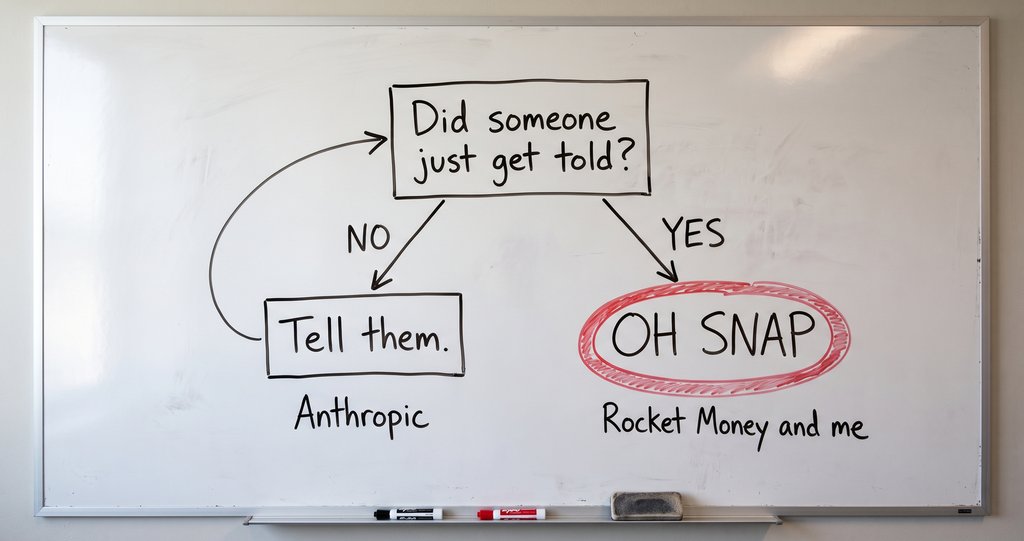
Anthropic Is Trying to Ground Rocket Money
· 4 min readTwo days after I wrote that AI would cut out apps like Rocket Money, Anthropic launched its own version. Rocket Money runs on Claude.
-
Read the Job Post, Not the Pitch
· 6 min readA job post for an AI engineer, asking for guardrails, testing and close work with experts, showed more grasp of AI agents than the vendor pitches I see. Before buying an agent, ask what it can't do alone and how you'd know it went wrong.
-
The UX Uprising
· 6 min readApps get worse as companies grow because the system rewards cutting quality, not because anyone is lazy. AI now lets customers rework clumsy interfaces, as I did with my own LinkedIn feed, and read the fine print on every offer.
-
AI Needs an Automatic Transmission
· 6 min readMost of us send every AI request to the biggest, priciest model, even the easy ones. A routing layer sends each request to the cheapest model that can handle it, and you can start free with tools like LiteLLM and test the savings yourself.
-
How Not to Blow Your AI Budget
· 6 min readSpending freely on AI experiments is the right call, but the bill tends to arrive months later with nobody able to say what it bought. I cover tying each dollar to a specific goal, tracing where it goes, and treating caps as check-ins.
-
Before the Bill Comes Due
· 12 min readIT flagged our Claude token spend to a budget owner who had never heard of it, and I had one night to save the API keys. I built a site showing the work, people and value, and the program kept going with new guardrails.
-
What I'd Look At Before Renewing Anything
· 5 min readAI is making it cheap to build the software layer many vendors sell, so renewals should look at what sits underneath. Vendors with deep data and know-how, like Persado, need new ways to deliver it, while thin wrappers are in trouble.
-
How to Read an AI Transformation Pitch
· 11 min readWritten for the senior leader sitting through an agentic AI pitch deck they don't fully understand. I point out what to look for, from a missing guardrail layer to governance labeled as friction, plus four questions to ask in the room.
-
The Fax Machine Test: How to Tell If Your AI Vendor Is Real
· 9 min readSix plain tests for sizing up anyone selling AI services, starting with swapping "AI" for "fax machine" to see if the pitch still makes sense. None of them need technical skill, and I suggest running them on me, too.
-
The Funnel Just Got a Middleman
· 8 min readAI summaries in search, email and browsers now sit between your content and your customers, answering the middle-of-funnel questions your pages used to handle. I share five steps marketers can take, from checking what AI says about your brand to building new measurement.
-
Enterprise Software's Three Quiet Reckonings
· 7 min readWith AI's help I moved my whole AI setup to a new laptop in about an hour, a job that once would have taken weeks. That points to three changes coming for enterprise software, in how vendors build products, price them, and charge for leaving.